
4 Week Post-Summer Skin Reset: How to Repair Dehydrated Skin After Summer
There is a point towards the end of summer when I start seeing the same pattern in clinic again and again.
A patient comes home from holiday rested, often with a tan, looking and feeling well. Then, over the following days and weeks, their skin starts to change.
It becomes dull. Tight. Rough. Dehydrated. Less comfortable.
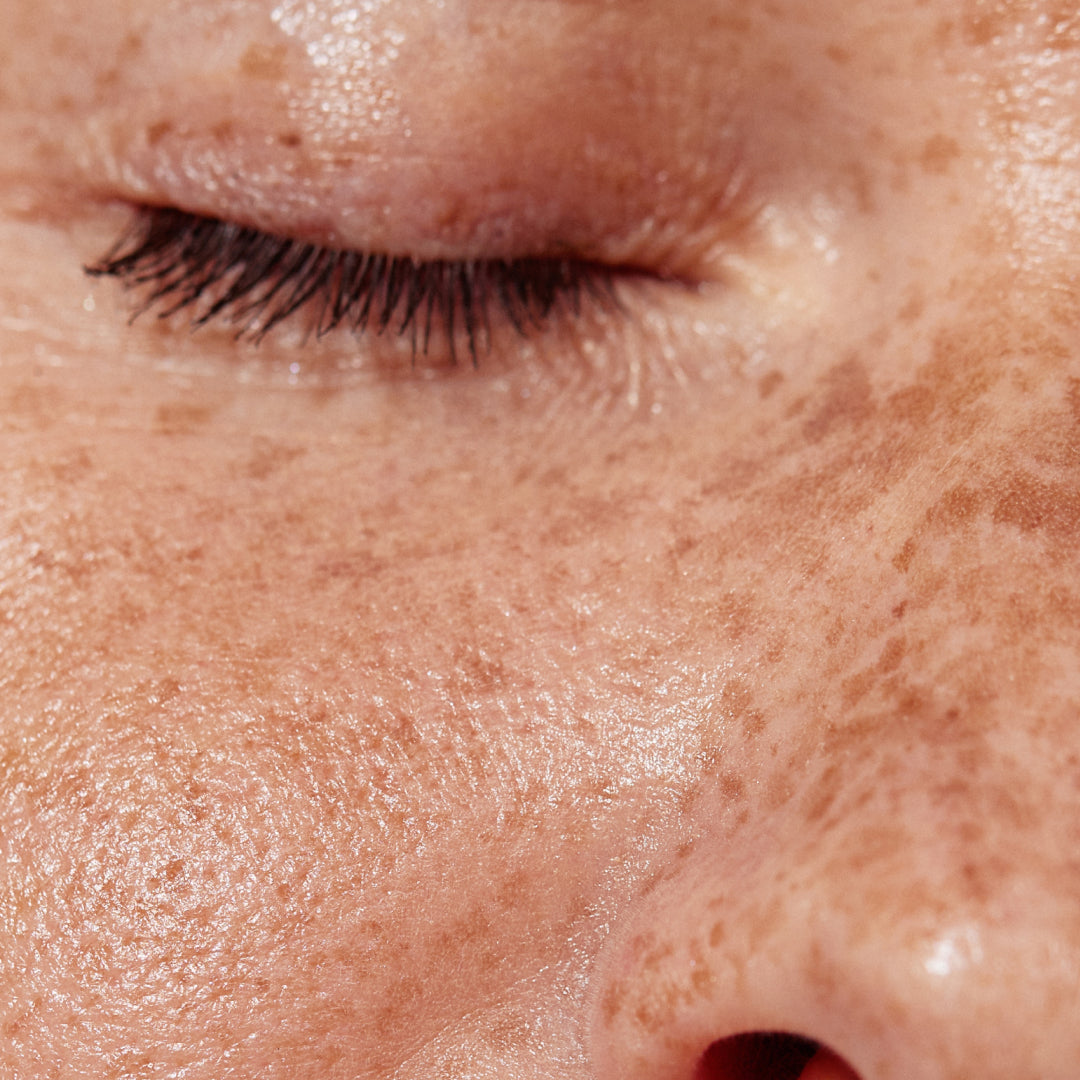
Pigmentation that was already there may look darker, while new areas of uneven pigmentation can appear. Products that you have used happily for months may suddenly sting. Your skin may feel dry, sensitive or simply unlike itself.
This is not your imagination, and it does not necessarily mean that your skincare routine has stopped working.
It is often your skin telling you that it needs something different.
What does summer actually do to your skin?
The summer holidays are not necessarily your skin’s best friend.
Heat, UV exposure, changes in humidity, air conditioning and travel can all place additional stress on the skin barrier. If you burn or spend prolonged periods in the sun, this barrier disruption can be accelerated.
Your skin barrier is designed to keep water in and irritants out. When it becomes disrupted, you may notice tightness after cleansing, increased sensitivity or stinging from products that would normally feel completely comfortable. At the more severe end, there can be dryness, flaking, redness and skin that seems to react to almost everything.
This barrier disruption is also one of the reasons dehydrated skin after summer is so common.
There is another reason you may feel that your skin looks worse once you are home.
Pigmentation does not always appear immediately.
Existing pigment can darken, and new pigment can develop through a process known as delayed tanning. This can begin around 48-72 hours after UV exposure and continue to build over the following days and weeks. As your tan eventually fades, it may not fade evenly, leaving sun spots, melasma and other areas of pigmentation looking more obvious.
Texture and dullness can also arrive late.
The skin cells damaged during your holiday take time to travel to the surface. This process is known as epidermal transit time, which is why the roughness and lack of radiance you notice after your holiday may actually be the result of what happened several weeks earlier.
So before you reach for a stronger acid, a scrub or your most intensive treatment, it is important to work out what your skin actually needs.
Sometimes it needs repair.
Sometimes it needs treatment.
And sometimes it simply needs time.
Why does skin become dehydrated after summer?
One of the most common concerns I see after the summer months is dehydrated skin.
It may feel tight after cleansing, look dull or lacklustre, develop more noticeable fine dehydration lines or suddenly become more sensitive to products you normally tolerate well.
It is important to distinguish between dry and dehydrated skin.
Dry skin generally lacks oil, whereas dehydrated skin lacks water. This means that you can have oily or combination skin and still experience dehydration.
After summer, heat, UV exposure, changes in humidity, air conditioning and travel can all place additional stress on the skin barrier. When the barrier is compromised, the skin is less effective at holding onto water.
This is why the answer to dehydrated skin is not simply to apply more and more hydrating products.
You need to support the barrier that keeps that hydration where it belongs.
Do you really need a transitional skincare routine?
I think it is essential, and the reason is straightforward.
Your skin has spent the summer defending itself, and it can come back depleted. The routine that suited it in August is rarely the routine it needs in September.
Early autumn is one of the best windows in the year to reset.
The temptation at this point is to reach for more.
More exfoliation to shift the dullness.
More acids to smooth rough texture.
Straight back to your full-strength Retinoid routine to tackle the pigmentation.
It is one of the most common mistakes I see, and it can turn a relatively short recovery period into a much longer one.
The correct order is repair first, then treat.
Almost everything works better on an intact barrier.
My three-part approach to a post-summer skin reset
When skin has been through a period of increased UV exposure, heat and travel, I work through three things in order:
Reduce the load.
Replace what the barrier needs.
Restore, then treat.
The order matters.
1. Reduce the load
Before you add anything, take things away.
Over-cleansing, harsh foaming surfactants, scrubs, cleansing devices and layers of acids can all place additional stress on an already compromised barrier.
Post-holiday skin has very little to spare.
For the first week, I recommend simplifying your skincare routine considerably.
In the morning, use Light Cleanse followed by Preparatory Mist, Peptide Emollient Veil and your sunscreen.
In the evening, use Light Cleanse, Preparatory Mist and Peptide Emollient Veil + if your skin is particularly dry, dehydrated or reactive.
Deep Cleanse can come back into the routine once the skin feels comfortable again, or remain part of your evening cleanse if you are wearing sunscreen and make-up daily and need it.
I would pause stronger treatment products such as Treat Tincture and Weekly Decree during this initial recovery period, alongside any additional acids, scrubs or exfoliating treatments.
And photoprotection stays.
Every single day.
Autumn UVA does not stop at the airport, and it can pass through clouds and window glass.
2. Replace what your skin barrier needs
One of the biggest misconceptions about how to hydrate dehydrated skin is that you simply need to add more hydration.
A healthy skin barrier needs three things working together: humectants that help draw water into the skin, lipids that support the structure between skin cells, and an occlusive element that helps slow water evaporating back out.
Think of your skin barrier as a brick wall.
The skin cells are the bricks. The lipids form the mortar between them.
When that mortar is compromised, water escapes more easily and irritants can penetrate more readily.
This is why your moisturiser is doing much more than simply making your skin feel softer.
In practice, I recommend applying Preparatory Mist followed by Peptide Emollient Veil.
Where the skin is markedly dry, dehydrated or reactive, I would move to Peptide Emollient Veil +.
Apply your moisturiser generously and more often than might feel necessary. Twice a day as standard, and up to three times where the skin is particularly unhappy.
Where the skin needs more immediate relief, I also reach for SOS Revitalising Sheet Mask and SOS Revitalising Eye Mask.
They travel well enough that I often recommend using them on the flight home rather than waiting until your post-holiday skin is already feeling depleted.
3. Restore, then treat
Once the skin is calm, and only then, you can rebuild the active side of your routine.
Protect Elixir can return during the day alongside sunscreen.
Treat Tincture can return at night, gradually rather than immediately returning to the frequency you were using before the summer.
Weekly Decree comes back last.
This is also the point at which pigmentation work begins in earnest.
And it is worth saying plainly: pigmentation is a project measured in months, not days.
What about post-summer dullness?
This is where I want to tackle something head on.
Dull skin does not automatically mean that your skin needs exfoliating.
If your skin is dehydrated, tight, stinging or visibly flaking, exfoliating that surface can simply add another layer of stress.
Do not scrub away peeling skin.
Do not add three new acids because your complexion looks flat.
And do not assume that a stronger treatment will produce a faster result.
If dullness is being driven by a compromised skin barrier, repairing that barrier is the first step towards getting your skin looking healthy again.
Gentle and consistent outperforms fast and harsh.
My four-week post-summer skin reset
This is the sequence I give patients in clinic.
Week one: strip back
Keep things deliberately simple.
AM
- Light Cleanse
- Preparatory Mist
- Peptide Emollient Veil
- Broad-spectrum SPF 50
PM
- Light Cleanse
- Preparatory Mist
- Peptide Emollient Veil +
Pause
- Treat Tincture
- Weekly Decree
- Additional acids
- Scrubs and aggressive exfoliation
I would also opt for cooler showers, particularly if your skin is reactive or you are prone to melasma, and prioritise proper rehydration after travelling.
The aim of week one is not to transform your skin.
It is to restore its ability to function normally.
Week two: bring one thing back
If your skin has returned to its normal level of sensitivity, you can begin to reintroduce an active such as Protect Elixir in the morning.
I recommend restarting one product at a time and giving your skin a week before you judge it.
This is important.
If you introduce several products at once and your skin reacts, it becomes difficult to know what has triggered the reaction.
Stinging on application is also a useful signal.
If a product you previously tolerated comfortably suddenly stings, your barrier may not have recovered sufficiently. Withdraw it for a few days, continue your simplified routine and try again once your skin feels comfortable.
Weeks three and four: rebuild the treatment side
Once your skin is settled, you can gradually bring back your more targeted treatments.
I recommend reintroducing a Granactive Retinoid serum such as Treat Tincture on alternate nights to begin with, applied to completely dry skin.
If your skin still feels sensitive, you can start by applying it over your moisturiser. You can also buffer with Peptide Emollient Veil underneath if needed.
As your skin becomes accustomed to your Retinoid again, gradually build towards nightly use and then towards applying it underneath your moisturiser.
Weekly Decree comes back once your skin has settled onto your Retinoid routine.
Start gently with the Airbrushing Acid for around 60 seconds and gradually build back up to two minutes as tolerated.
And throughout all four weeks, sunscreen remains non-negotiable.
Post-summer pigmentation: what should you treat now?
Autumn is an important pigmentation treatment window for two reasons.
UV intensity is beginning to fall, so brightening ingredients and Retinoids can be easier to manage. You also have the runway to complete a longer-term treatment plan before the following summer.
But there is an important distinction between treating pigmentation and trying to remove every mark as quickly as possible.
Pigmentation is a project measured in months.
I recommend allowing a minimum of around 12 weeks before judging your pigmentation programme because you are working with the skin turnover cycle, not against it.
Daily broad-spectrum SPF 50 is the foundation.
If you have melasma, I also recommend considering a tinted mineral sunscreen containing iron oxides, because melasma can respond to visible light as well as UV.
Brightening ingredients can then be introduced gradually, ideally one or two at a time.
Once the skin is calm, superficial professional peels may also form part of a pigmentation treatment plan.
What should wait?
Anything ablative or aggressive should wait while a tan persists.
I would also approach strong laser treatments or intense pulsed light very carefully in melasma or deeper skin tones, where there is a risk of making pigmentation worse rather than better.
Gentle and consistent outperforms fast and harsh in every pigmentary condition I treat.
And there is one safety point I never leave out.
Any pigmented spot that is new, changing, growing, has an irregular border, contains more than one colour or simply looks different from everything else on your skin needs a professional assessment.
The overwhelming majority of pigmentation is harmless.
But melanoma can present as a dark mark, and that is one thing you never manage as a cosmetic concern.
The post-summer skin reset: the short version
If your skin feels dull, dry, dehydrated, tight, reactive or more pigmented after summer, resist the temptation to attack it.
Instead:
1. Repair before you treat.
Barrier first, always.
2. Take products away before you add them.
For the first week, focus on cleanser, mist, moisturiser and sunscreen.
3. Focus on your barrier if your skin feels dehydrated.
Restoring hydration is only part of the picture. Your skin also needs to be able to hold onto it.
4. Reintroduce one active at a time.
Give your skin time to adjust before adding another.
5. Start your pigmentation plan in autumn, but be patient.
Pigmentation is measured in months, not weeks.
6. Protect your skin every day.
Broad-spectrum SPF 50 remains essential throughout the year.
7. Get anything new or changing checked properly.
Do not assume every pigmented mark is simply sun damage.
The most important thing to remember is that your skin does not need punishment after summer.
It needs a considered transition.
Repair first. Rebuild gradually. Then treat.
Consistency beats intensity every single time.